February, 2010

Unhappy Meal?
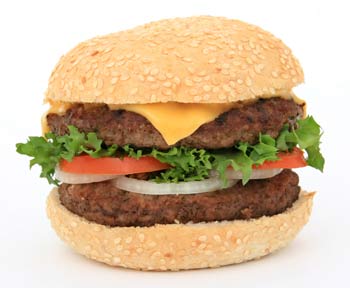
People all over the world seem to love their meat, and they want lots of it. The bad news, however, is that the increasing demand for meat is playing havoc with our environment.
A little while back, this problem was not very noticeable since the number of animals being reared for meat was small enough to manage. But now, there are so many cattle and fowl being raised in farms worldwide that our planet is finding it more and more difficult to cope.
DEFORESTATION
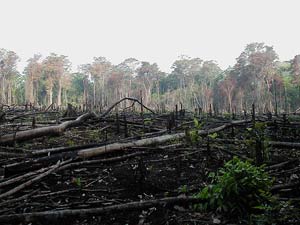
Forests are being cut down at a drastic rate to make room for animal farms. In Central America, from which a large part of the world's beef comes from, almost forty percent of the rainforest has been cleared or burned down for cattle pasture. Places that were once home to many different types of plants and animals now have only two species living on it - grass and cows!
BIODIVERSITY LOSS:
Man's taste for meat has grown beyond just beef, pork and chicken. Nowadays, people are greedy for more exotic types of meat and they are willing to pay large amounts of money for it. This is leading to the killing of wild animals like elephants, gorillas, chimpanzees and monkeys for their flesh.
People from poor countries are hunting down these beautiful creatures because they desperately need the money to survive.
If this practice is not stopped immediately, these animals will soon become extinct and our planet will be the poorer for it.
DISEASES:
Some dishonest meat traders are so focused on making a profit that they will even sell meat that comes from a diseased animal.
There is a danger then of that disease spreading to other parts of the world when the meat is exported. In some extreme cases, people have died after having eaten infected meat unknowingly.
Large amounts of meat in a diet can also create health problems like heart diseases, obesity, diabetes etc.
GLOBAL WARMING:
This is a consequence of all the fuel that we use to produce edible meat, including what is used for transportation, refrigeration and cooking. Burning of fossil fuels produce global warming gases like carbon dioxide, which is worsening the greenhouse effect.
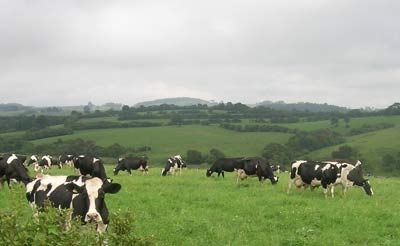
A dairy cow produces about 75 kilograms of methane a year (equivalent to 1.5 tons of carbon dioxide)
WASTE DISPOSAL
In the United States, pigs, chickens and cows in farms produce 130 times more waste than people do. The waste flows into rivers, lakes and seas, causing pollution and making the water unfit to use. Dumping animal waste into water bodies also creates "dead-zones". Animal waste is rich in nutrients and encourages the growth of microscopic plants called phytoplankton in vast numbers.
The phytoplankton uses up the oxygen in the water, leaving less for the fish and other plants. Soon, nothing else is able to survive in the lake, turning it into a "dead zone".
You wouldn't have thought our dinner capable of creating such environmental problems. But, this doesn't mean that we have to give up meat completeley. What we can do is make wiser decisions regarding our food. If all of us were to cut down the amount of meat that we eat, there would be a decrease in the demand for meat worldwide. Farmers will then not raise as many animals for their flesh as they do now, which will help solve many of the problems listed above. Plus, including more fruits and vegetables in our diet will make us a lot healthier.
This article first appeared in the September 2004 issue of What's Up.
Re-published here in February 2010.
A little while back, this problem was not very noticeable since the number of animals being reared for meat was small enough to manage. But now, there are so many cattle and fowl being raised in farms worldwide that our planet is finding it more and more difficult to cope.
DEFORESTATION
Forests are being cut down at a drastic rate to make room for animal farms. In Central America, from which a large part of the world's beef comes from, almost forty percent of the rainforest has been cleared or burned down for cattle pasture. Places that were once home to many different types of plants and animals now have only two species living on it - grass and cows!
Jungle burned to make way for farms.
BIODIVERSITY LOSS:
Man's taste for meat has grown beyond just beef, pork and chicken. Nowadays, people are greedy for more exotic types of meat and they are willing to pay large amounts of money for it. This is leading to the killing of wild animals like elephants, gorillas, chimpanzees and monkeys for their flesh.
People from poor countries are hunting down these beautiful creatures because they desperately need the money to survive.
If this practice is not stopped immediately, these animals will soon become extinct and our planet will be the poorer for it.
DISEASES:
Some dishonest meat traders are so focused on making a profit that they will even sell meat that comes from a diseased animal.
There is a danger then of that disease spreading to other parts of the world when the meat is exported. In some extreme cases, people have died after having eaten infected meat unknowingly.
Large amounts of meat in a diet can also create health problems like heart diseases, obesity, diabetes etc.
GLOBAL WARMING:
This is a consequence of all the fuel that we use to produce edible meat, including what is used for transportation, refrigeration and cooking. Burning of fossil fuels produce global warming gases like carbon dioxide, which is worsening the greenhouse effect.
Cgoodwin, Wikimedia
In addition, cows produce methane as a by-product of digestion. Methane is a more powerful global warming gas than carbon dioxide which makes it more lethal for the environment.A dairy cow produces about 75 kilograms of methane a year (equivalent to 1.5 tons of carbon dioxide)
WASTE DISPOSAL
In the United States, pigs, chickens and cows in farms produce 130 times more waste than people do. The waste flows into rivers, lakes and seas, causing pollution and making the water unfit to use. Dumping animal waste into water bodies also creates "dead-zones". Animal waste is rich in nutrients and encourages the growth of microscopic plants called phytoplankton in vast numbers.
The phytoplankton uses up the oxygen in the water, leaving less for the fish and other plants. Soon, nothing else is able to survive in the lake, turning it into a "dead zone".
You wouldn't have thought our dinner capable of creating such environmental problems. But, this doesn't mean that we have to give up meat completeley. What we can do is make wiser decisions regarding our food. If all of us were to cut down the amount of meat that we eat, there would be a decrease in the demand for meat worldwide. Farmers will then not raise as many animals for their flesh as they do now, which will help solve many of the problems listed above. Plus, including more fruits and vegetables in our diet will make us a lot healthier.
This article first appeared in the September 2004 issue of What's Up.
Re-published here in February 2010.

| Would you give up eating meat to save the environment? |

Supersize Problem
The real cost of a burger.
(Flash animation)
The real cost of a burger.
(Flash animation)
