January, 2011

This splendid species needs help urgently
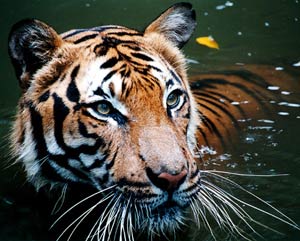
Malayan Tiger
(B-cool, Wikimedia)
(B-cool, Wikimedia)
A century ago, there were more
than 100,000 tigers in the wild.
Today, there are only around 4,000.
One reason for this awful decline is hunting. Although killing tigers is illegal, hunters do it anyway. They hunt tigers for their skin and body parts, which some people think have special medical powers.
The other reason is "habitat loss". Every species needs a habitat – space where the creatures can find food, water and shelter. Forests are the habitat of tigers.
Sadly, Asia's forests have been shrinking because of uncontrolled human activity. When tiger habitats shrink, the number of tigers falls.
The reverse is also true. The tiger population can only grow if its habitat, the forest, is protected. That's why groups trying to protect the tigers make sure that their work is not focused only on tigers. Saving the tigers’ habitats will also protect all the other creatures that depend on the forests: deer, bears, lizards, frogs, birds, spiders, insects and so on.
As you know, saving forests from destruction is also an important way to fight global warming. Trees use up carbon dioxide, a gas that is warming up the planet. That’s why the conservation groups believe: save the tiger, save the world.
Tiger conservation
One of the campaigns started by tiger defenders to protect these magnificent mammals is the Tiger Conservation Initiative. Dozens of wildlife protection groups are involved. The project is led by the World Bank, which provides money to help countries develop.
Scientists and other experts are first studying the situation to find the best and fastest ways to rescue the tiger. The different wildlife groups will share their experiences. Then, the World Bank will raise money for projects that can make a difference.
"Nothing short of global action will bring back wild tigers," said Grace Ge Gabriel of the International Tiger Coalition. The chief of the World Bank, Robert Zoellick, added, "This is a problem that cannot be handled by individual nations alone."
Adapted from an article that appeared in the July 2008 issue of What's Up.
One reason for this awful decline is hunting. Although killing tigers is illegal, hunters do it anyway. They hunt tigers for their skin and body parts, which some people think have special medical powers.
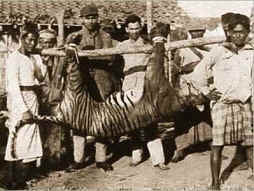
The Balinese Tiger was hunted to extinction - the last one was killed in September, 1937.
The other reason is "habitat loss". Every species needs a habitat – space where the creatures can find food, water and shelter. Forests are the habitat of tigers.
Sadly, Asia's forests have been shrinking because of uncontrolled human activity. When tiger habitats shrink, the number of tigers falls.
The reverse is also true. The tiger population can only grow if its habitat, the forest, is protected. That's why groups trying to protect the tigers make sure that their work is not focused only on tigers. Saving the tigers’ habitats will also protect all the other creatures that depend on the forests: deer, bears, lizards, frogs, birds, spiders, insects and so on.
As you know, saving forests from destruction is also an important way to fight global warming. Trees use up carbon dioxide, a gas that is warming up the planet. That’s why the conservation groups believe: save the tiger, save the world.
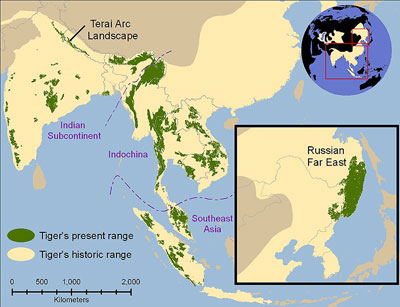
Tigers were once found all over Asia, but now their numbers have greatly reduced.
Tiger conservation
One of the campaigns started by tiger defenders to protect these magnificent mammals is the Tiger Conservation Initiative. Dozens of wildlife protection groups are involved. The project is led by the World Bank, which provides money to help countries develop.
Scientists and other experts are first studying the situation to find the best and fastest ways to rescue the tiger. The different wildlife groups will share their experiences. Then, the World Bank will raise money for projects that can make a difference.
"Nothing short of global action will bring back wild tigers," said Grace Ge Gabriel of the International Tiger Coalition. The chief of the World Bank, Robert Zoellick, added, "This is a problem that cannot be handled by individual nations alone."
Adapted from an article that appeared in the July 2008 issue of What's Up.

Special Mission:
Protecting endangered species
Protecting endangered species
