July, 2010

Most Unwanted
Wikimedia / Vardion
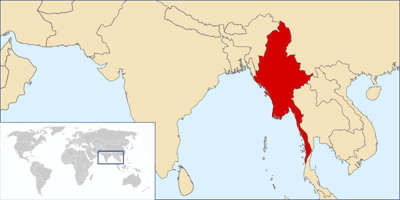
Daily life is difficult for most of Myanmar's citizens. The country (marked in red, in the map above) is ruled by a military government that controls people's lives in all sorts of unpleasant ways. Things are especially harsh for one group of people called the Rohingya. They must endure many more hardships than other residents of the country.
The Rohingya are a minority community living in the northern part of Myanmar. There are around 800,000 of them in a total population of 55 million. They are Muslims in a country that is mainly Buddhist.
Myanmar's government recognizes more than 135 ethnic minorities. However, the Rohingya are not one of them, even though they have been living there for many generations. They are not treated as citizens and they are denied many rights that people who are citizens of a country take for granted.
For example, the Rohingya are not allowed to travel within Myanmar. They need to obtain an official permit just to travel to a different town, and the permit costs too much for most Rohingya people. Such rules can cause tremendous suffering. One Rohingya man tells a tragic story of how his teenaged son died because he couldn't get medical help on time.
In Singapore, if someone living in Changi finds a job in Jurong, she doesn't need anyone's permission to move to the other side of the island. In fact, in almost all countries, people can move freely from one part of the country to another.
However, in Myanmar, if a Rohingya worker is jobless, he must pay for permission to leave his village to find work. The Rohingya who live in Myanmar's Northern Rakhine State must also apply for approval to get married. Bride and groom are charged high fees for this, and even then it can take up to two years. Couples who get married without this permission can be arrested. Those who do marry legally are forced to sign a commitment not to have more then two children.
Rohingya become refugees
It is no surprise that over the past three decades, thousands of Rohingya have been willing to risk dangerous journeys for the chance of a better life in neighbouring countries. People who are forced to flee their homes to escape hardship, persecution or war are called refugees. Many Rohingya now live in Bangladesh, in camps specially set aside for refugees. But, there are few jobs for them there either, so thousands have been forced to board flimsy boats and try to reach other shores. Malaysia, for example, is already estimated to have around 14,000 Rohingya.
The Myanmar government insists that the Rohingya do not belong in Myanmar at all. It says that this group of people are illegal immigrants from next-door Bangladesh or their descendents. It's true that the Rohingya speak a dialect of Bengali similar to what's spoken in a certain part of Bangladesh. However, they are probably descended from traders who settled in Rakhine more than 1,000 years ago. Imagine being told you don't belong even though your people have been living there for a thousand years.
The prejudice against the Rohingya can be seen in a letter written by the Myanmar government's representative in Hong Kong, Ye Myint Aung. He said that the Rohingya could not be considered people of Myanmar because unlike the "fair and soft, good looking as well" complexion of truly Myanmese people, the Rohingya had "dark brown" skin and were "as ugly as ogres".
Although his letter was meant to persuade the rest of the world that Myanmar's policy was right, it had the opposite effect. Governments and people around the world were shocked at the racist attitude against the Rohingya.
Not welcomed
It isn't just the Myanmar government that has been guilty of treating the Rohingya badly. When their boats reached neighbouring countries, they were not welcomed.
Thailand would force the boats back out to sea, some of them with little food and water. Several boatloads of starving and dehydrated Rohingya migrants had to picked up by Indian and Indonesian coastguards.
The suffering of the Rohingya has gained the attention of major international organisations. The Myanmar government has agreed to let the United Nations do more for the population of the Rakhine area where the Rohingya live.
The Association of South East Asian Nations (ASEAN) also took notice of this issue. Myanmar is a member of ASEAN, so other countries in the club - such as Singapore, Thailand, Malaysia and Indonesia - have an opportunity to persuade Myanmar to treat the Rohingya better.
For now, the Rohingya know that they are an unwanted people. "Life for us Rohingya is like a game of football - and we are the balls," says Mohamad Ismail, who lives in a refugee camp in southern Bangladesh. "The Bangladesh government doesn't want us and kicks us back to Myanmar, which in turn kicks us back here. Nobody wants us, but we're human beings, after all, aren't we?"
This article first appeared in the April 2009 issue of What's Up.
Re-published here in July 2010.
The Rohingya are a minority community living in the northern part of Myanmar. There are around 800,000 of them in a total population of 55 million. They are Muslims in a country that is mainly Buddhist.
Myanmar's government recognizes more than 135 ethnic minorities. However, the Rohingya are not one of them, even though they have been living there for many generations. They are not treated as citizens and they are denied many rights that people who are citizens of a country take for granted.
For example, the Rohingya are not allowed to travel within Myanmar. They need to obtain an official permit just to travel to a different town, and the permit costs too much for most Rohingya people. Such rules can cause tremendous suffering. One Rohingya man tells a tragic story of how his teenaged son died because he couldn't get medical help on time.
In Singapore, if someone living in Changi finds a job in Jurong, she doesn't need anyone's permission to move to the other side of the island. In fact, in almost all countries, people can move freely from one part of the country to another.
However, in Myanmar, if a Rohingya worker is jobless, he must pay for permission to leave his village to find work. The Rohingya who live in Myanmar's Northern Rakhine State must also apply for approval to get married. Bride and groom are charged high fees for this, and even then it can take up to two years. Couples who get married without this permission can be arrested. Those who do marry legally are forced to sign a commitment not to have more then two children.
Rohingya become refugees
It is no surprise that over the past three decades, thousands of Rohingya have been willing to risk dangerous journeys for the chance of a better life in neighbouring countries. People who are forced to flee their homes to escape hardship, persecution or war are called refugees. Many Rohingya now live in Bangladesh, in camps specially set aside for refugees. But, there are few jobs for them there either, so thousands have been forced to board flimsy boats and try to reach other shores. Malaysia, for example, is already estimated to have around 14,000 Rohingya.
The Myanmar government insists that the Rohingya do not belong in Myanmar at all. It says that this group of people are illegal immigrants from next-door Bangladesh or their descendents. It's true that the Rohingya speak a dialect of Bengali similar to what's spoken in a certain part of Bangladesh. However, they are probably descended from traders who settled in Rakhine more than 1,000 years ago. Imagine being told you don't belong even though your people have been living there for a thousand years.
The prejudice against the Rohingya can be seen in a letter written by the Myanmar government's representative in Hong Kong, Ye Myint Aung. He said that the Rohingya could not be considered people of Myanmar because unlike the "fair and soft, good looking as well" complexion of truly Myanmese people, the Rohingya had "dark brown" skin and were "as ugly as ogres".
Although his letter was meant to persuade the rest of the world that Myanmar's policy was right, it had the opposite effect. Governments and people around the world were shocked at the racist attitude against the Rohingya.
Not welcomed
It isn't just the Myanmar government that has been guilty of treating the Rohingya badly. When their boats reached neighbouring countries, they were not welcomed.
Thailand would force the boats back out to sea, some of them with little food and water. Several boatloads of starving and dehydrated Rohingya migrants had to picked up by Indian and Indonesian coastguards.
The suffering of the Rohingya has gained the attention of major international organisations. The Myanmar government has agreed to let the United Nations do more for the population of the Rakhine area where the Rohingya live.
The Association of South East Asian Nations (ASEAN) also took notice of this issue. Myanmar is a member of ASEAN, so other countries in the club - such as Singapore, Thailand, Malaysia and Indonesia - have an opportunity to persuade Myanmar to treat the Rohingya better.
For now, the Rohingya know that they are an unwanted people. "Life for us Rohingya is like a game of football - and we are the balls," says Mohamad Ismail, who lives in a refugee camp in southern Bangladesh. "The Bangladesh government doesn't want us and kicks us back to Myanmar, which in turn kicks us back here. Nobody wants us, but we're human beings, after all, aren't we?"
This article first appeared in the April 2009 issue of What's Up.
Re-published here in July 2010.