November, 2010

Aung San Suu Kyi
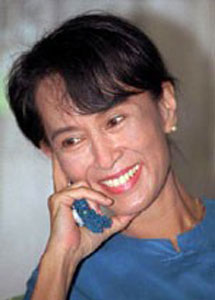
In the middle of Yangon, a woman was held prisoner in her own home for many years. Her name is Aung San Suu Kyi (say "oun san su chee"), and she's the leader of the movement for democracy in Myanmar and a heroine to millions.
Her arrest was condemned by several international organisations, including the United Nations and ASEAN. Some nations even refused to trade with Myanmar until its government let her go.
However, the military government of Myanmar claimed that she was a threat to the stability and peace of the country. They used this reason to keep her under house arrest for the last 20 years, even though she's never used violence to fight for her cause – unlike the government, which has killed and injured hundreds of pro-democracy protesters.
It meant that she was unable to stand for the elections in Myanmar in November 2010. In fact, it is for this very reason that she chose to endure the hardship of imprisonment: she wants to lead the country herself.
It's no surprise that Ms Suu Kyi is popular in her country. Her father was a national hero, sometimes called the father of modern-day Myanmar.
His name was General Aung San, and it was he who founded the modern Burmese army, as well as negotiating the country's independence from the British in 1947. The same year, however, he was murdered by his rivals.
Her mother, Khin Kyi, was also an impressive figure. She became a important politician after her husband's death, and served as her country's ambassador to India and Nepal.
Ms Suu Kyi received a cosmopolitan upbringing, studying in English Catholic schools in Yangon, as well as universities in New Delhi and Oxford. As a young woman, she worked at the United Nations in New York, and married an American professor who was an expert on Tibetan and Bhutanese culture.
Then in 1988, she returned to Myanmar to tend to her sick mother. By coincidence, this was the year that the leader of the ruling party stepped down. In response, the Myanmarese people held huge rallies to call for an end to military government. She became involved in the movement for democracy, and formed a new political party so she could run in elections.
The Myanmarese government didn't like this, so it placed her under house arrest in 1989. She was told that she would be released if she agreed to leave the country, never to return, but she refused.
The government wouldn't even let her out when Ms Suu Kyi's party won the national elections in 1990. Normally, this would have meant she would become Prime Minister, but the government refused to hand over power, keeping her under arrest.
She received the Nobel Peace Prize in 1991, but had to send her two sons to collect the award. Using the prize money, she set up a charity to provide health and education for her fellow countrymen.
Her husband died in 1999. He had only been allowed to see her five times after her arrest, as the government had refused to let him enter Myanmar once they knew he had cancer.
Ms Suu Kyi was finally released from her house arrest in mid-November. Despite the long years of imprisonment, this inspiring lady is still as determined as ever to do the right thing.
Her arrest was condemned by several international organisations, including the United Nations and ASEAN. Some nations even refused to trade with Myanmar until its government let her go.
However, the military government of Myanmar claimed that she was a threat to the stability and peace of the country. They used this reason to keep her under house arrest for the last 20 years, even though she's never used violence to fight for her cause – unlike the government, which has killed and injured hundreds of pro-democracy protesters.
It meant that she was unable to stand for the elections in Myanmar in November 2010. In fact, it is for this very reason that she chose to endure the hardship of imprisonment: she wants to lead the country herself.
It's no surprise that Ms Suu Kyi is popular in her country. Her father was a national hero, sometimes called the father of modern-day Myanmar.
His name was General Aung San, and it was he who founded the modern Burmese army, as well as negotiating the country's independence from the British in 1947. The same year, however, he was murdered by his rivals.
Her mother, Khin Kyi, was also an impressive figure. She became a important politician after her husband's death, and served as her country's ambassador to India and Nepal.
Ms Suu Kyi received a cosmopolitan upbringing, studying in English Catholic schools in Yangon, as well as universities in New Delhi and Oxford. As a young woman, she worked at the United Nations in New York, and married an American professor who was an expert on Tibetan and Bhutanese culture.
Then in 1988, she returned to Myanmar to tend to her sick mother. By coincidence, this was the year that the leader of the ruling party stepped down. In response, the Myanmarese people held huge rallies to call for an end to military government. She became involved in the movement for democracy, and formed a new political party so she could run in elections.
The Myanmarese government didn't like this, so it placed her under house arrest in 1989. She was told that she would be released if she agreed to leave the country, never to return, but she refused.
The government wouldn't even let her out when Ms Suu Kyi's party won the national elections in 1990. Normally, this would have meant she would become Prime Minister, but the government refused to hand over power, keeping her under arrest.
She received the Nobel Peace Prize in 1991, but had to send her two sons to collect the award. Using the prize money, she set up a charity to provide health and education for her fellow countrymen.
Her husband died in 1999. He had only been allowed to see her five times after her arrest, as the government had refused to let him enter Myanmar once they knew he had cancer.
Ms Suu Kyi was finally released from her house arrest in mid-November. Despite the long years of imprisonment, this inspiring lady is still as determined as ever to do the right thing.